
PRODUCTS · ROTARY VALVES
Rotary Valve – Controlled material discharge
Rotary valves transfer dust, powder and granular material between connected systems while maintaining separation between the inlet and outlet. They are commonly installed below filters, cyclones and silos where collected material must be discharged continuously without compromising pressure conditions in the extraction or conveying system.
2 product ranges
TFI and RV
Up to 44.8 m³/h
discharge capacity
ABOUT ROTARY VALVES
What are rotary valves and when should you use them?
Rotary valves are used to transfer bulk material from one system to another while limiting unwanted airflow between the two sides. A rotating rotor moves material through the valve in controlled pockets, while the close sealing between the rotor and housing creates an effective airlock. In dust extraction and pneumatic conveying systems, rotary valves are typically installed below filters or cyclones to discharge collected material into silos, conveyors or other downstream equipment.
Why use a rotary valve?
Filters and cyclones often operate under different pressure conditions from the equipment receiving the discharged material. A rotary valve allows dust or bulk material to leave the system continuously while helping maintain the pressure separation required for stable extraction and conveying performance. This makes the valve both a material handling component and an important part of the overall air-management concept.
KEY FEATURES
Function
Controlled material discharge
System role
Airlock and transfer device
Installation
Below filters, cyclones or silos
Material type
Dry, non-adhesive powders and granules
Operation
Continuous rotary discharge
Integration
Extraction and pneumatic conveying systems
PRODUCT
Rotary valves in our range
Two product families cover standard industrial discharge and ATEX applications.
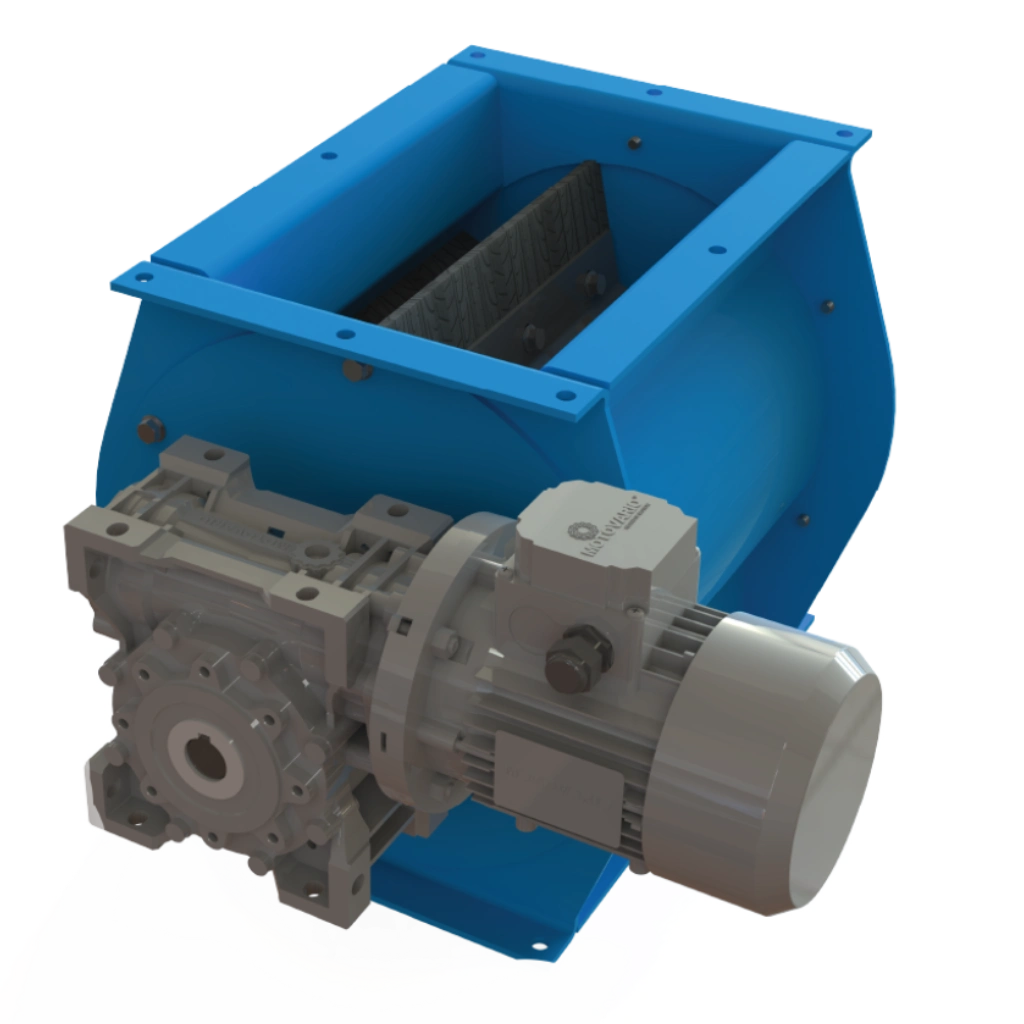
INDUSTRIAL ROTARY VALVE
TFI
TFI is a robust rotary valve designed to transfer material between two separate systems, particularly where collected dust is discharged from a filter or cyclone into a silo or conveying line. The rotor uses rubber blades to provide an effective seal between the inlet and outlet, while an elastic clutch helps reduce the risk of mechanical damage and supports long service life.
11.8–44.8 m³/h · 28 rpm · industrial discharge
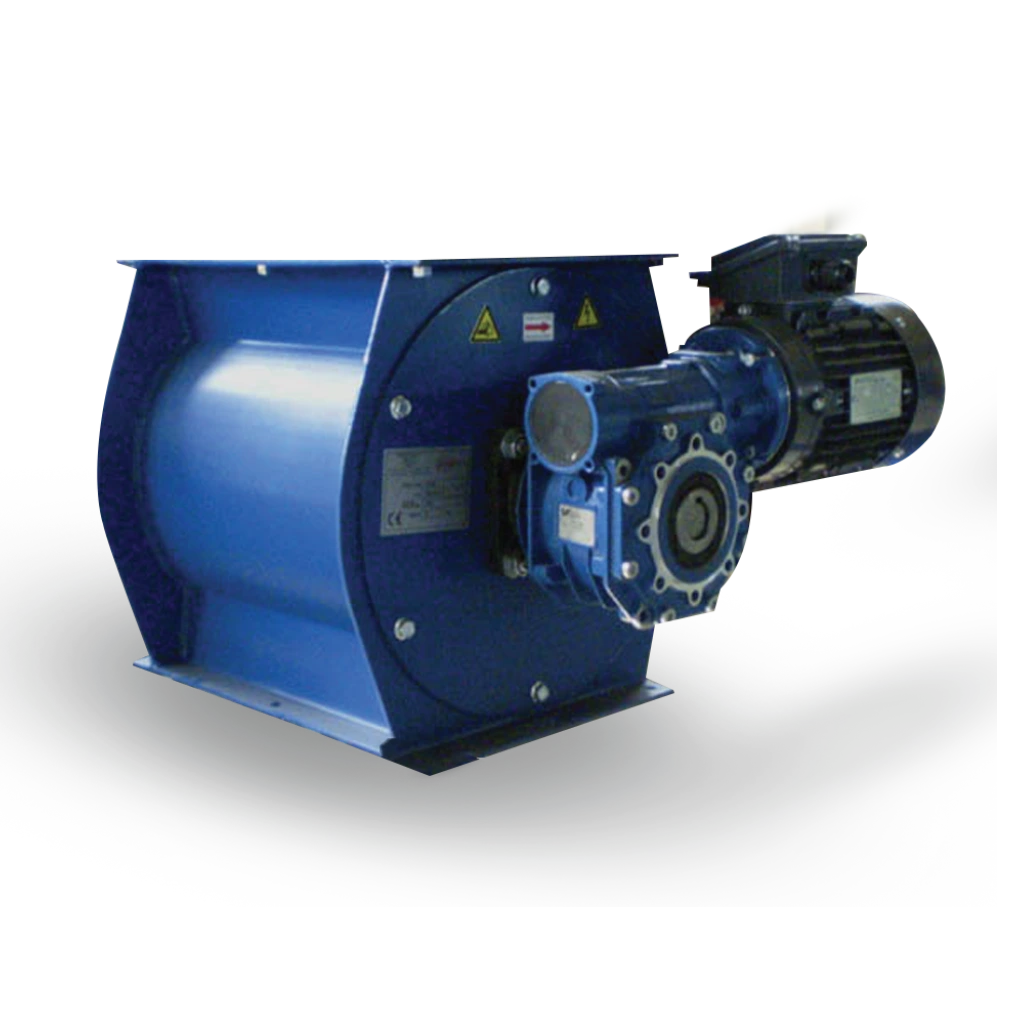
ATEX ROTARY VALVE
RV
RV is designed for controlled discharge and filling of powder or granular materials from silos, cones, pneumatic conveying systems, bag filters and cyclones. The range is available in several ATEX configurations with capacities from 2.4 to 24 m³/h, making it suitable for applications where controlled bulk-material transfer must be combined with explosion-protection requirements.
2.4–24 m³/h · 30 rpm · ATEX execution
Not sure which rotary valve fits your system?
Tell us the material, required discharge capacity, upstream equipment and operating conditions and we will help select the appropriate valve and configuration.
APPLICATIONS
Where rotary valves are used
Rotary valves are used wherever collected or stored material needs to move between connected process systems in a controlled way.
WHY TEHNO FILTER ROTARY VALVES
Reliable discharge as part of the complete system
NEED A ROTARY VALVE?
Tell us what material you need to discharge, the required capacity, particle characteristics and where the valve will be installed. Our team will help define the appropriate model and configuration.