
PRODUCTS · WATER FILTERS
Water Filters – Wet filtration for sparks, metal dust and difficult contaminants
Water filters use a controlled water separation process to capture sparks, metallic dust, sticky particulate and other difficult contaminants before they can continue through the extraction system. They are particularly suitable for grinding, welding and cutting applications where conventional dry filtration may not be the preferred solution.
Up to 7,500 m³/h
airflow capacity
Wet separation
using a water tank
ABOUT WATER FILTRATION
What are water filters and when should you use them?
Industrial water filters, also known as wet separators, use water to separate hazardous particulate from the extraction air stream. Contaminated air enters the unit and is brought into intensive contact with water. Sparks and particles are surrounded by the water phase, lose energy and are separated from the air before settling at the bottom of the tank. This operating principle makes wet filtration particularly useful for materials that generate sparks, sticky contaminants or particles that can create challenges for conventional dry filter media.
Why use wet separation?
Processes such as grinding and cutting can generate both fine metallic dust and hot particles. By bringing these contaminants into direct contact with water, a wet separator can suppress sparks and separate particulate without relying on conventional bags or cartridges as the primary filtration stage. Collected material settles in the water tank, allowing it to be removed during maintenance.
KEY FEATURES
Filtration principle
Wet separation
Main contaminants
Metal dust, sparks and sticky particulate
Construction
Stainless steel
Fan
Integrated
Airflow capacity
Up to 7,500 m³/h
Safety applications
Suitable for ATEX zones
PRODUCT
Water filter in our range
A complete wet-filtration unit developed for demanding metalworking and spark-generating processes.
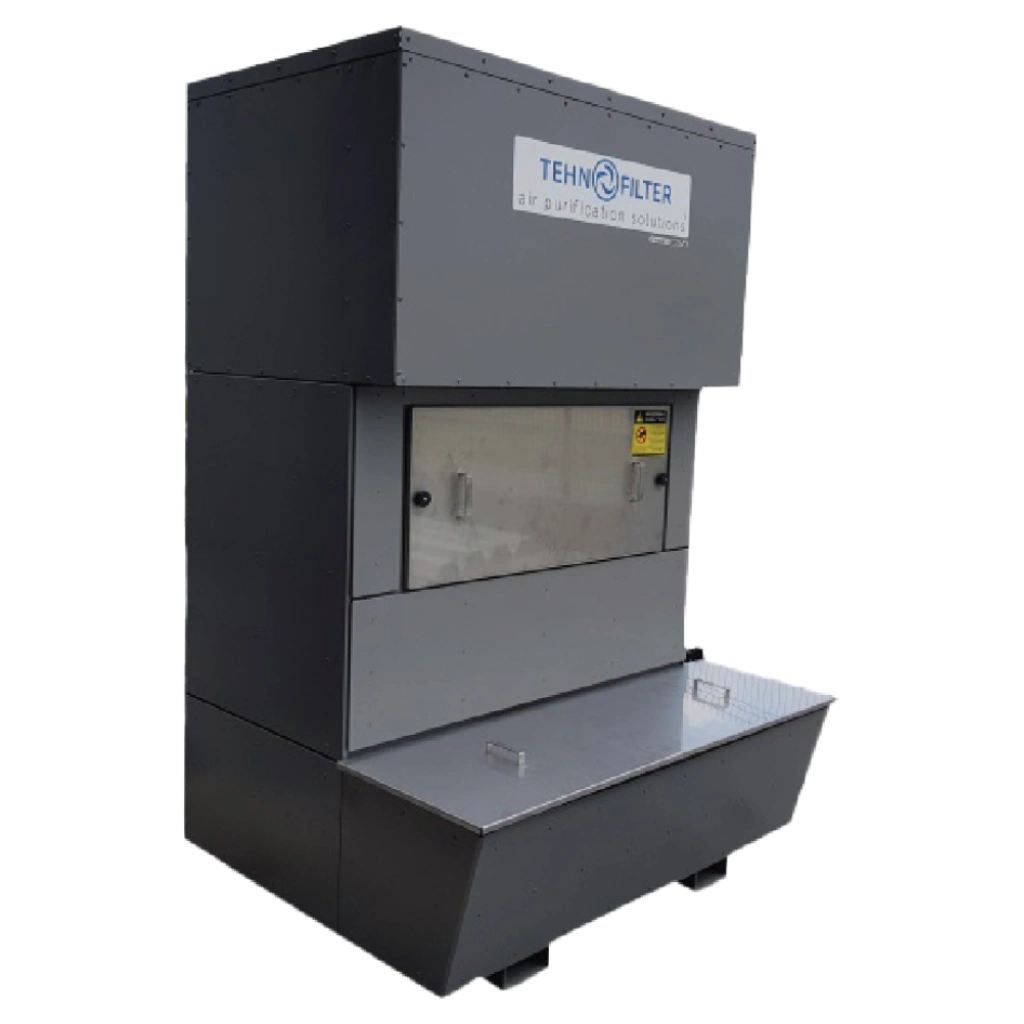
INDUSTRIAL WET SEPARATOR
WF
WF is a stainless-steel wet filtration unit designed primarily for processes such as grinding, welding and cutting where flammable particulate, metallic dust or flying sparks may be present. The integrated fan draws contaminated air into the water tank, where the particulate mixes with water and is separated from the air stream. Collected material then settles at the bottom of the unit for removal and disposal.
5,000–7,500 m³/h · wet separation · integrated fan
Not sure whether wet filtration is right for your process?
Tell us what material you grind, weld or cut, whether sparks are generated and what type of dust or contamination enters the extraction system. We will help determine whether the WF wet separator is the appropriate solution.
APPLICATIONS
Where water filters are used
Wet filtration is especially useful where sparks, metallic particulate or difficult contaminants make conventional dry filtration less suitable.
WHY TEHNO FILTER WATER FILTERS
Wet separation built for demanding processes
NEED WET FILTRATION?
Tell us what material you process, what type of dust is generated, whether sparks or sticky contaminants are present and the required airflow. Our team will help determine whether a water filtration system is the right approach.