
PROJECT · INDUSTRIAL AIR TREATMENT
30,000 m³/h activated carbon adsorption system
A high-capacity gas-phase air treatment system designed to remove VOCs and odorous compounds from process exhaust air using 15 tonnes of specially selected granular activated carbon.
MetalCo d.o.o.
Osijek, Hrvatska
2025.
ABOUT THE PROJECT
Challenge
The process exhaust air contains volatile organic compounds and odorous trace gases that cannot be effectively treated using conventional particulate filtration alone.
The system therefore required a dedicated adsorption solution capable of treating a continuous airflow of 30,000 m³/h while maintaining outlet emissions below the specified target of 5 mg/m³. The adsorption bed also needed sufficient carbon mass and residence time to maintain stable treatment performance throughout its operating cycle.
Solution
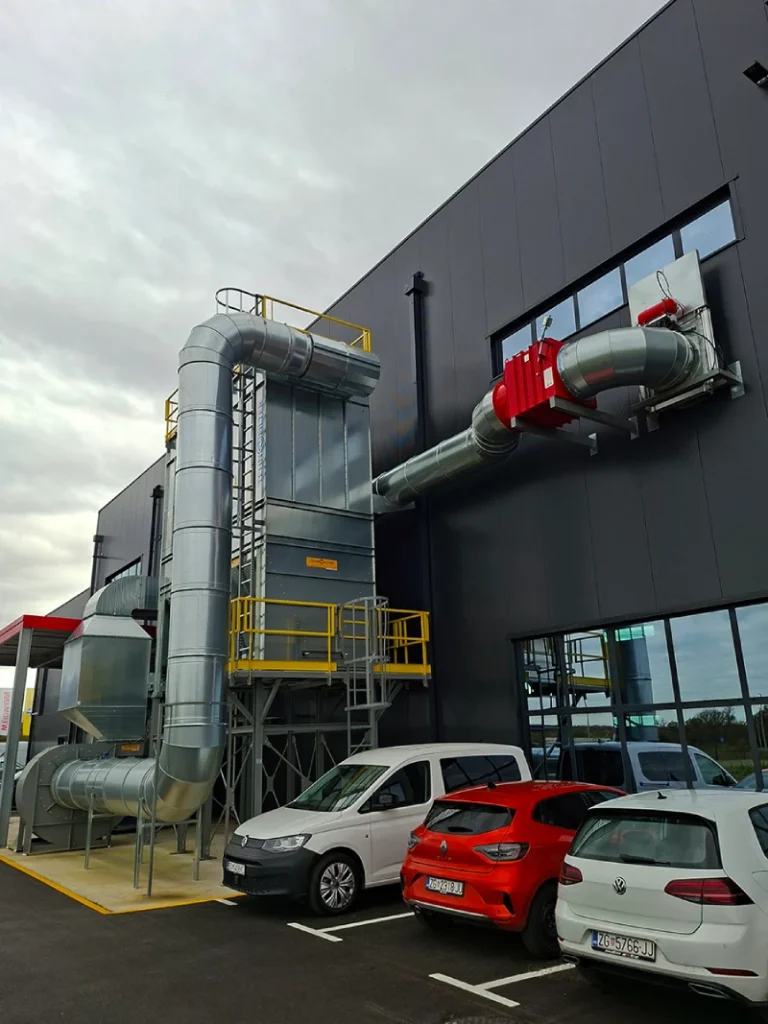
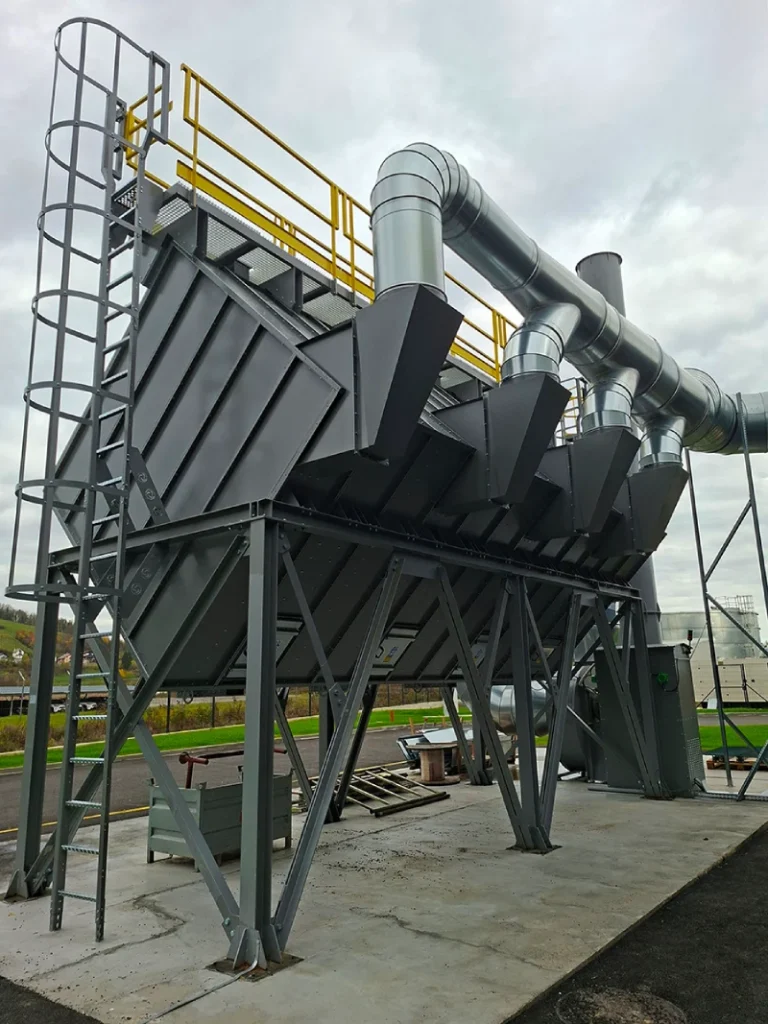
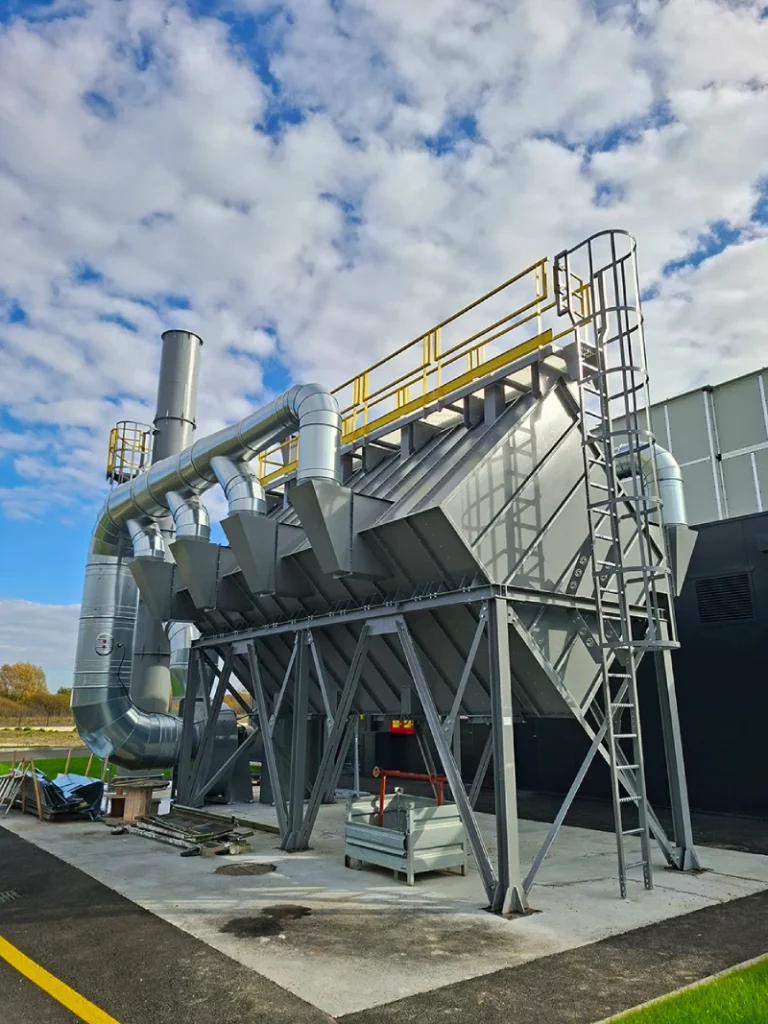
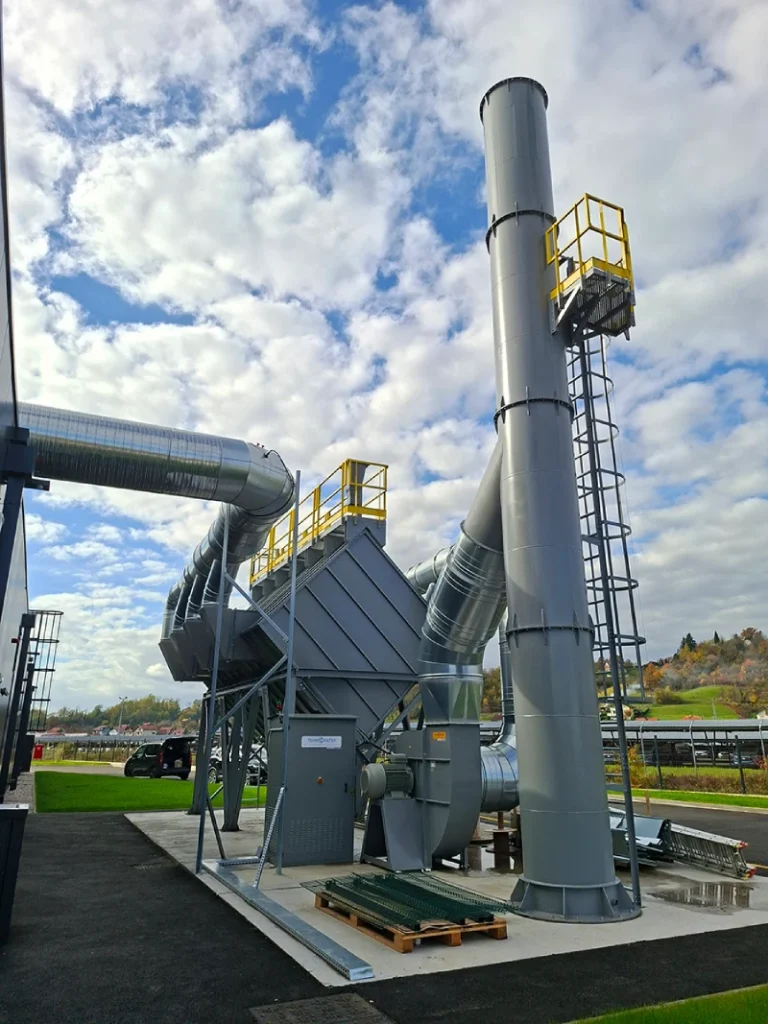
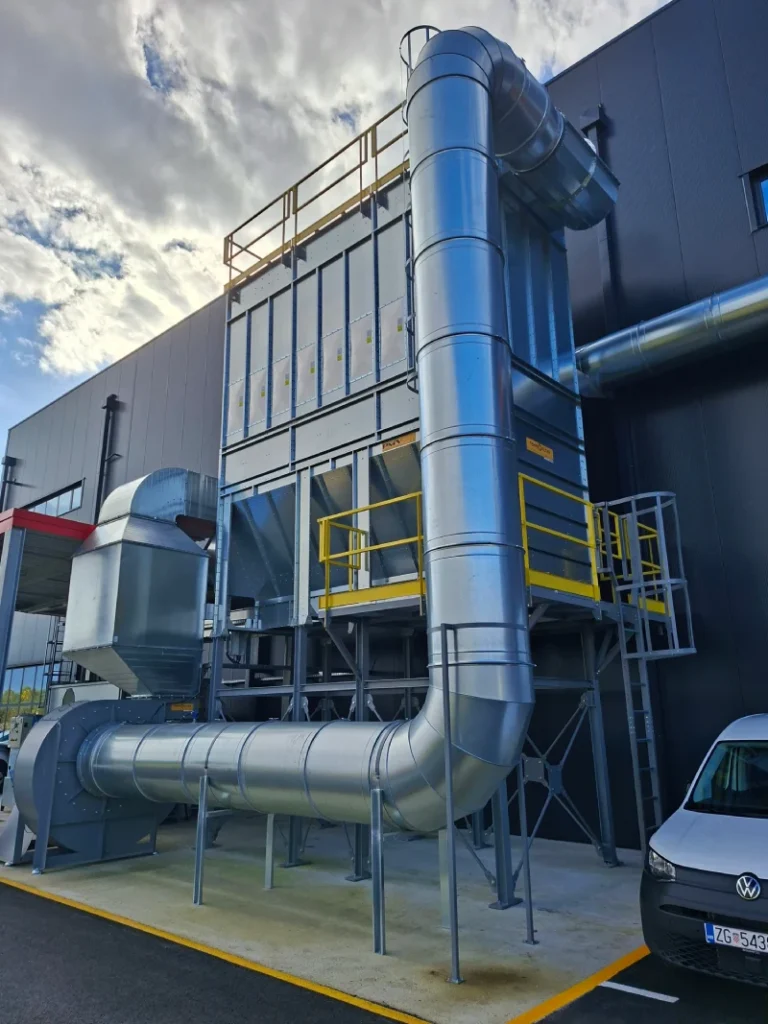
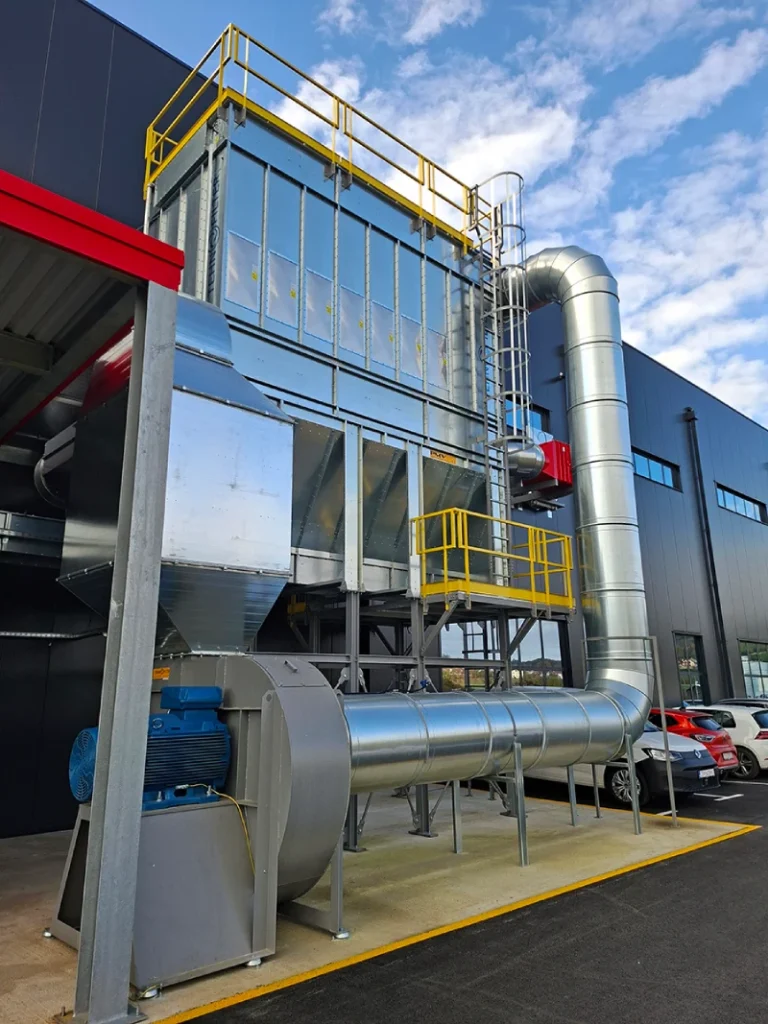
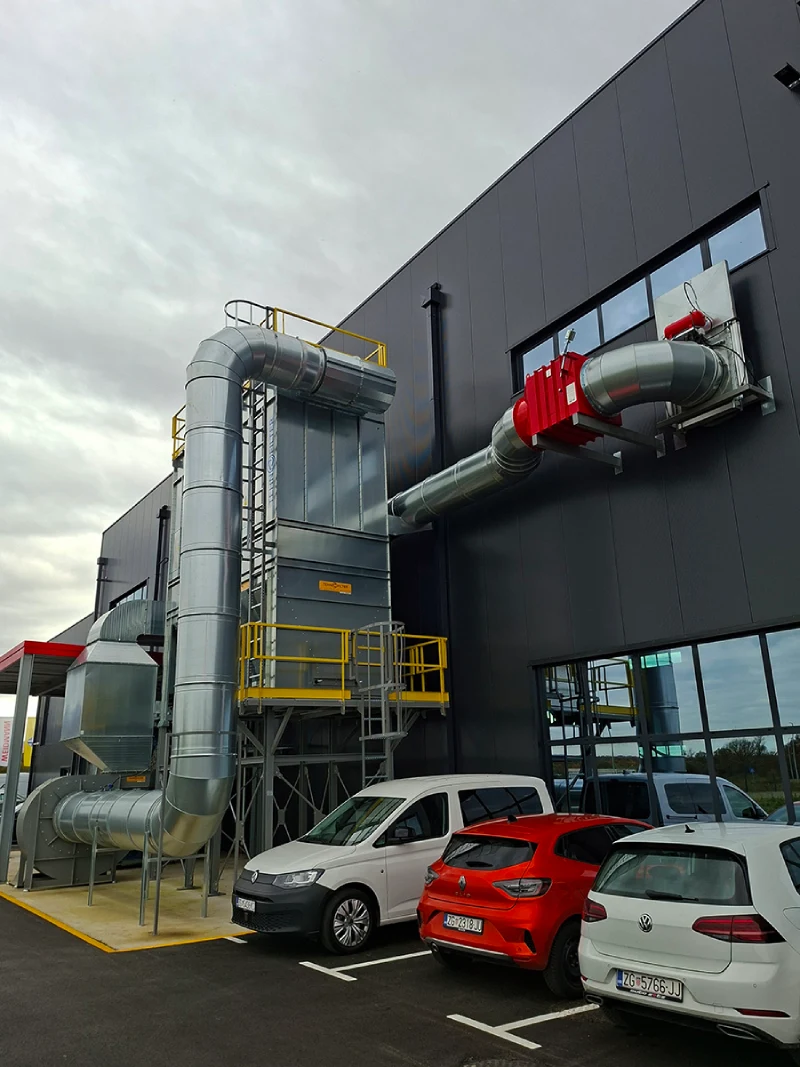
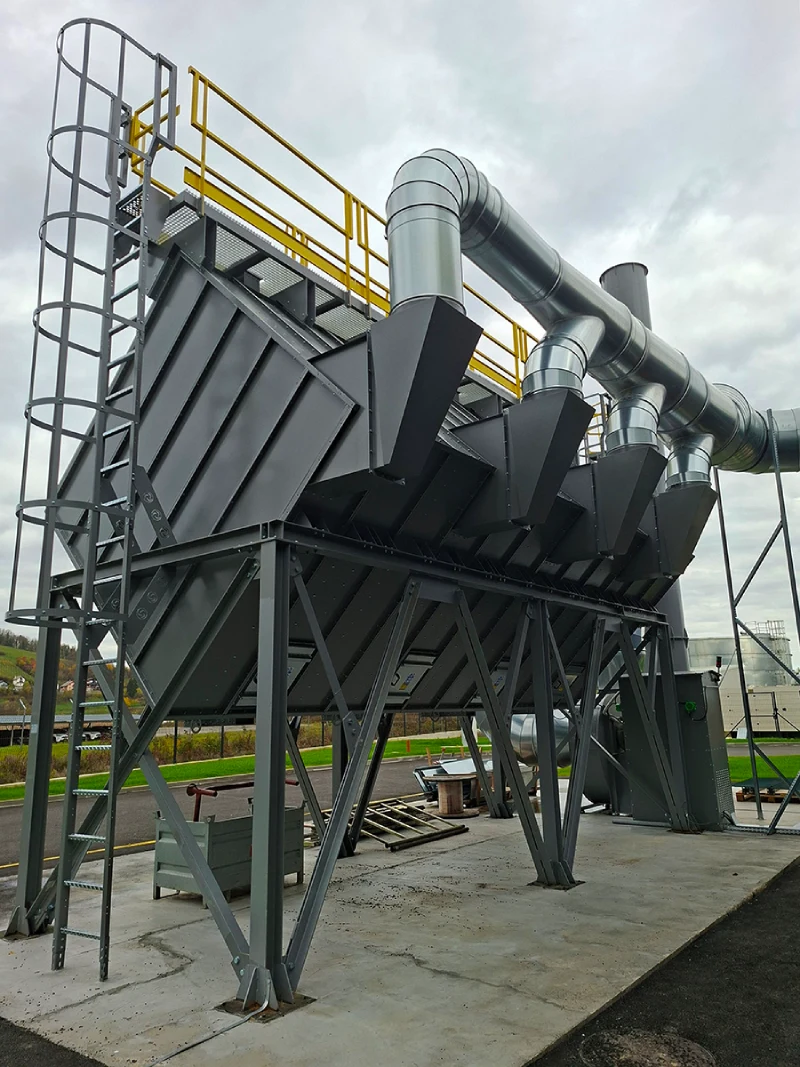
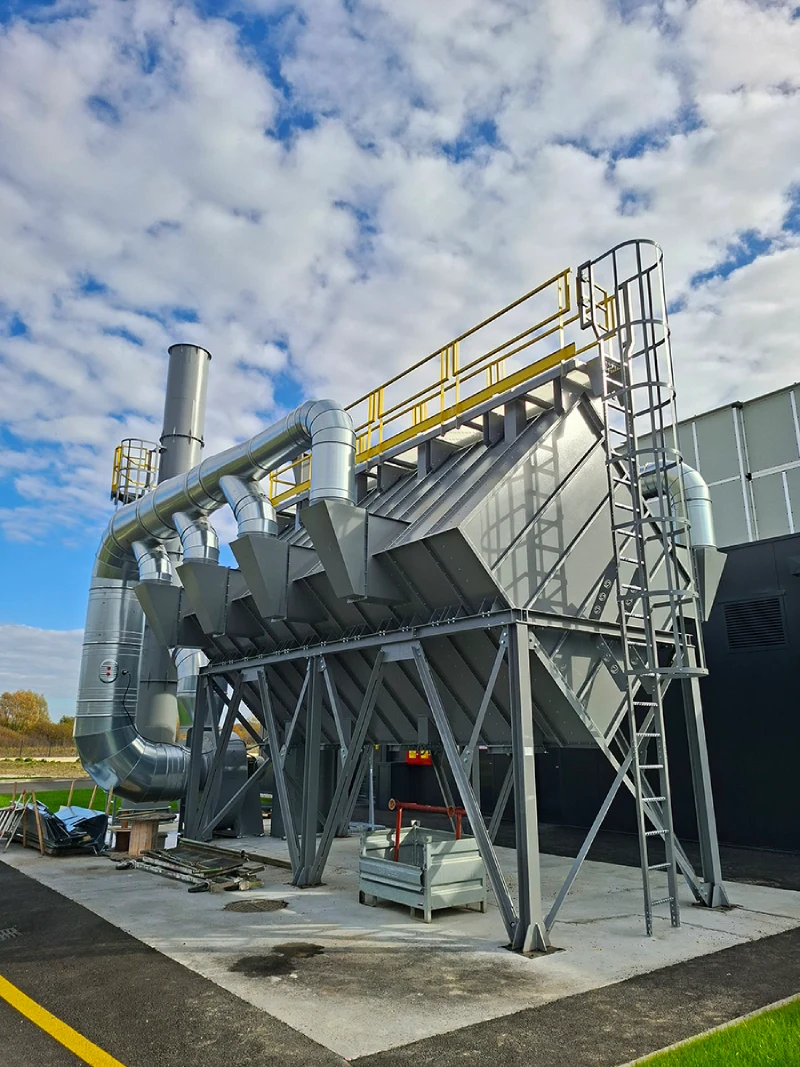
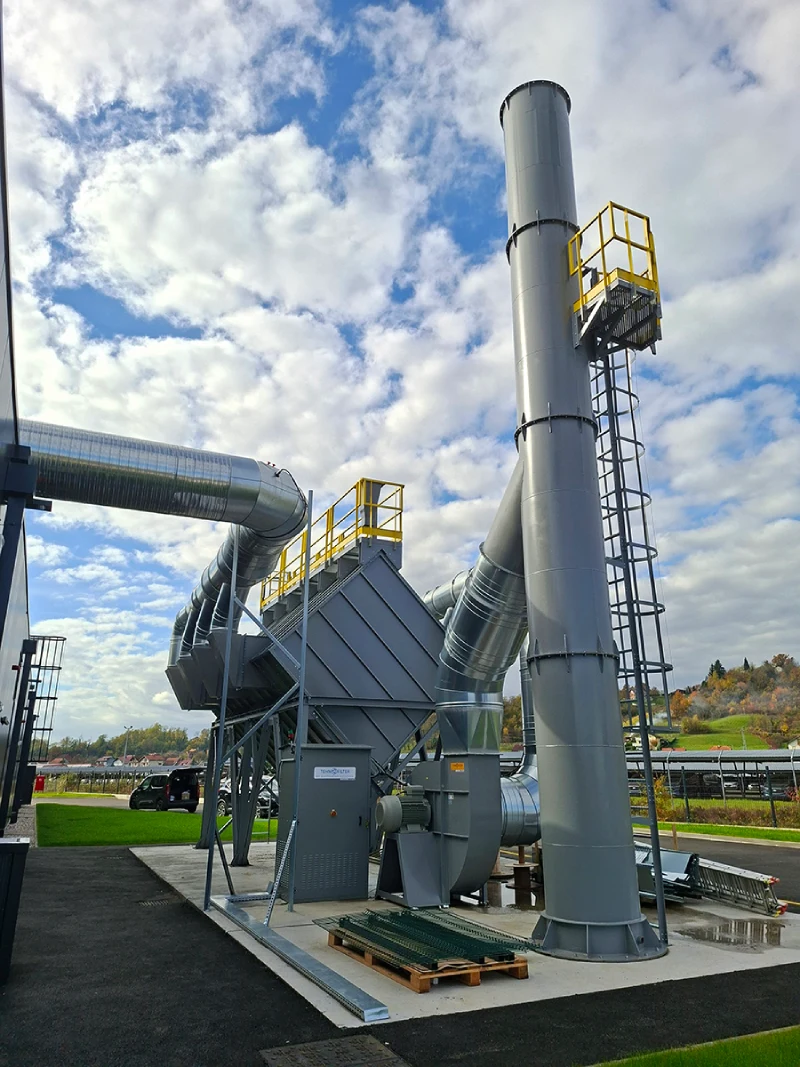
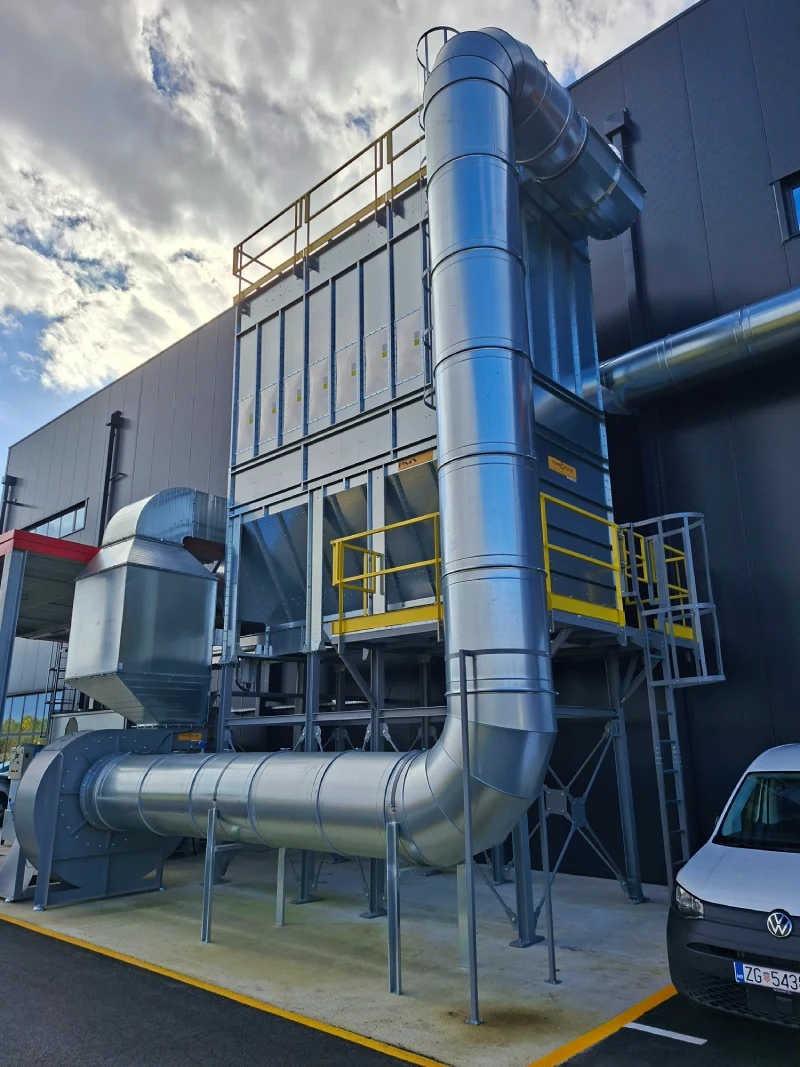
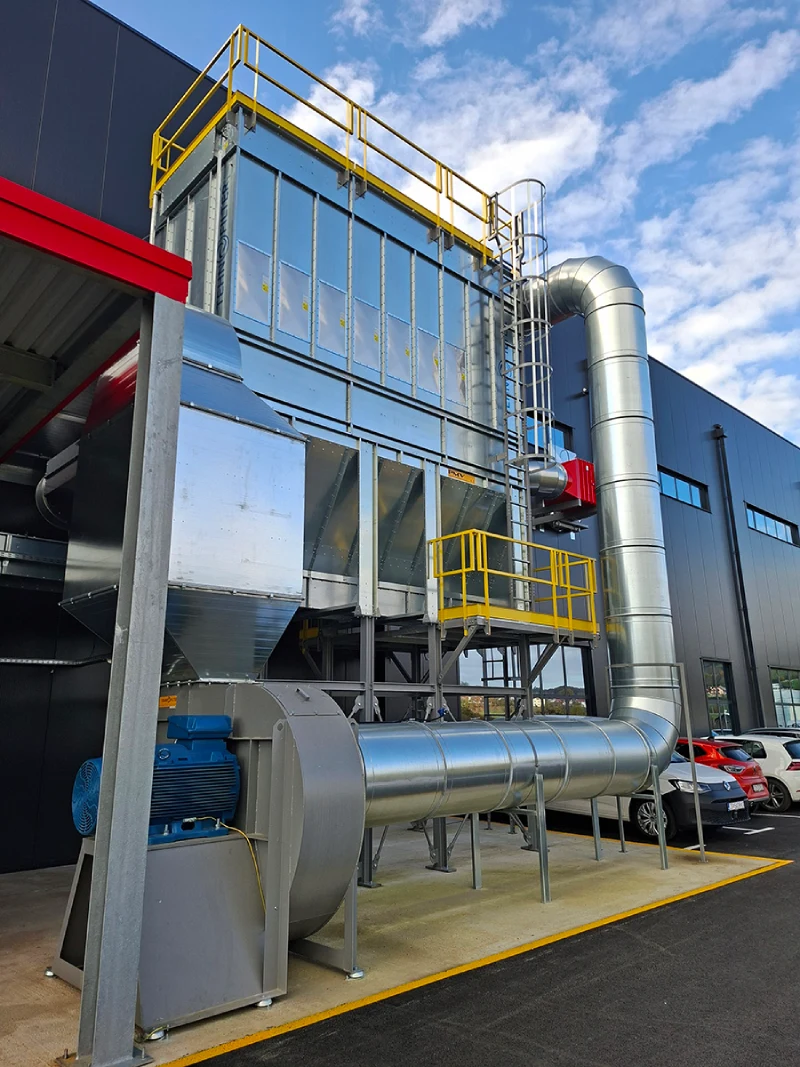
Tehno Filter delivered a fixed-bed activated carbon adsorption system designed for a nominal airflow of 30,000 m³/h. The vessel is charged with 15,000 kg of granular activated carbon specifically selected for the adsorption of styrene and related volatile organic compounds.
As contaminated air passes through the carbon bed, VOC molecules are retained within the micro- and mesoporous structure of the activated carbon. The bed depth and carbon mass are designed to provide sufficient contact time for the treated air to reach an outlet concentration below the specified emission threshold of 5 mg/m³.
A VOC monitoring system continuously tracks exhaust emissions and provides the information required to schedule carbon regeneration or replacement before the emission threshold is exceeded.
Result
The completed installation provides continuous gas-phase treatment for a process exhaust flow of 30,000 m³/h. The combination of a large activated carbon bed, controlled residence time and continuous VOC monitoring allows the system to maintain treatment performance while providing a clear basis for predictive maintenance of the adsorption media. The result is a robust air treatment solution designed around both emission control and long-term operational reliability.
Client
MetalCo d.o.o.
Application
VOC and odour treatment
Location
Osijek, Hrvatska
Year
2026.
Airflow
30,000 m³/h
ADSORBENT
15,000 kg activated carbon
KEY PARAMETERS
Designed around emission performance
30,000 m³/h
nominal airflow
15,000 kg
activated carbon
≤ 5 mg/m³
design emission threshold
VOC monitoring
for carbon service planning
Effective VOC control depends on more than carbon quantity. Airflow, contact time and continuous monitoring must work together.
HAVE A SIMILAR PROJECT?
Tell us about your production process, airflow requirements and operating conditions. Our team can develop a solution tailored to your application.